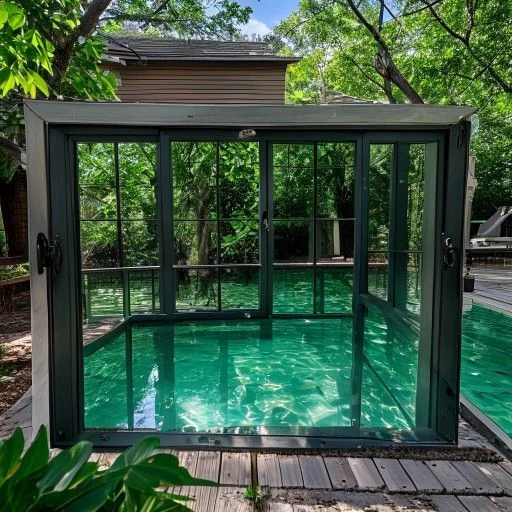
You installed a screen enclosure so leaves, frogs, and most bugs would stay out of your pool. Then one morning the water looks cloudy, the steps feel slick, or you notice a green tint along the shallow end. Screened pools in Central Florida still turn green — and it is not because the cage failed. It is because algae does not care about mesh. This guide explains the real reasons screened pools go green in Marion County, what you can check before calling for help, and when professional green pool cleanup is the right move.
Screen enclosures block debris, not algae
A pool cage is excellent at keeping out large organic matter and reducing direct sunlight compared with an open pool. What it does not do is create a sealed, sterile environment. Fine pollen, dust, and spores pass through screen mesh. Rain still falls inside. Wind pushes organic film along the waterline. Humidity stays high under the cage, which can actually encourage biofilm growth on steps and tile when chlorine drops even slightly.
Homeowners in Ocala, Summerfield, The Villages, and On Top of the World often assume a screened pool is lower maintenance than an open pool. In some ways that is true — you are not fishing out palm fronds every week. But chemistry still matters, filters still load, and Florida heat still burns through chlorine. When any piece of that chain slips, algae gets a foothold fast.
Why Central Florida makes green water more likely
Marion County sits in the heart of Florida’s humid subtropical climate. Long summers, afternoon thunderstorms, and intense UV create perfect conditions for algae when sanitizer is low. Oak and pine pollen seasons — typically March through May — dump fine organic material that consumes chlorine without you noticing until the water dulls.
Screened pools in golf-course communities and active-adult neighborhoods often sit near mature landscaping. Shade from oaks and magnolias is pleasant, but leaf litter along the cage base breaks down into phosphates that feed algae. Irrigation overspray from lawn systems hits screen walls and drips into the pool, adding more organic load.
Rain is another underestimated factor. A typical summer downpour can add hundreds of gallons of fresh water with near-zero chlorine. pH swings. Cyanuric acid dilutes. If your service visit was four days ago and a storm hits tonight, your pool can drift out of balance before anyone tests again.
Common causes of green screened pools
Before assuming the worst, understand the usual suspects. Most green or cloudy screened pools trace back to one or more of these:
- Low or zero chlorine — tabs ran out, feeder clogged, pump not running enough hours, or heavy bather load after a weekend party
- High pH — chlorine works less effectively when pH climbs above 7.8, common after rain or when alkalinity is unmanaged
- Clogged or dirty filter — cartridge or DE filters that are overdue for cleaning circulate water but do not remove algae spores effectively
- Full baskets — skimmer and pump baskets packed with pollen and debris restrict flow; low flow means poor chlorination
- Skipped or delayed service — biweekly routes work when visits are consistent; missing two weeks in July is different from missing two weeks in January
- Phosphate buildup — organic material from landscaping and storms can fuel algae even when chlorine looks adequate on a strip test
Green is not always full algae bloom. Sometimes water is cloudy milky white from chemistry imbalance, or yellow-green from pollen concentration at the surface. A proper test — not just a dip strip — helps distinguish algae from filtration or chemistry problems.
What screened pool owners often get wrong
We hear the same assumptions from new customers across Marion County. None of these are foolish — they are just incomplete.
“The screen blocks enough sun that I need less chlorine.” Screened pools still receive significant UV. Stabilizer (CYA) management matters. Too little CYA and chlorine burns off fast. Too much and chlorine becomes sluggish. Neither extreme prevents green water.
“I only use the pool on weekends, so biweekly is always enough.” Florida pools need consistent sanitizer even when nobody swims. Algae does not wait for your calendar. Travel-heavy homeowners in OTOW and The Villages discover this when they return from a three-week trip to green water.
“I shocked it once, so it should be fine.” One shock treatment can kill free-floating algae but may not address biofilm on walls, clogged filters, or underlying phosphate load. Without brushing, filtration run time, and follow-up chemistry, green often returns within days.
“My neighbor’s open pool is fine, so my screened pool should be easier.” Every pool has different sun exposure, tree cover, equipment age, and bather load. Comparison is not diagnosis.
DIY steps before you call for green pool cleanup
If water is slightly cloudy but not swamp-green, homeowners can sometimes stabilize things before a service visit — but only if equipment is running and there are no electrical hazards at the pad.
- Verify the pump is running its full scheduled hours
- Empty skimmer and pump baskets completely
- Check filter pressure — if it is far above your normal baseline, filtration may be the bottleneck
- Test chlorine and pH with a reliable kit; do not trust a single strip from last summer
- Brush walls and steps — algae clings to surfaces; killing what floats is only half the job
- Run the filter continuously for 24–48 hours after balancing chemistry if advised
If water is opaque green, smells strongly, or you see dead animals in the pool, stop and call for professional help. Green pool recovery is a separate project from routine membership — it requires aggressive treatment, possible floc or filter cleaning, and sometimes multiple visits. Quoted upfront, not hidden inside a monthly plan.
How professional chemical service prevents repeat problems
Routine chemical service is the best defense against green water on a screened pool you actually use. Each visit should include professional water testing beyond chlorine and pH — at minimum alkalinity, and ideally stabilizer readings logged over time so trends are visible.
Consistent route service means someone notices when filter pressure creeps up, when baskets fill faster during pollen week, or when a feeder is running low before you leave for vacation. That is harder to replicate with monthly DIY testing and occasional big-box store chemical runs.
CCC Pools is a new company building routes in Marion County. We do not claim decades of local reviews we cannot show. What we do promise is documented visits, clear scope on what routine service includes versus green recovery, and honest conversation when your pool needs more than the next scheduled stop.
When green pool cleanup is unavoidable
Sometimes prevention window has passed. Heavy rain after a long trip, a pump that failed while you were away, or months without service can leave a screened pool in full algae bloom. Recovery typically involves:
- Assessment of algae type and severity
- Shock and algaecide treatment matched to the situation — not generic dumping
- Aggressive brushing and extended filtration
- Filter cleaning or backwash cycles as needed
- Follow-up visits until water is clear and chemistry holds
Timeline varies. A light green pool with working equipment may clear in days. A neglected pool with a dirty filter and high phosphate load can take a week or more. Anyone who guarantees “clear by tomorrow” without seeing your pool is selling marketing, not service.
Seasonal patterns in Marion County
Spring (March–May): Peak pollen — chlorine demand spikes; baskets need emptying every few days even between service visits.
Summer (June–September): Heat plus daily storms — watch pH after rain; algae grows fastest when water is warm and sanitizer is low.
Fall (October–November): Leaf drop along cage edges — organic material at the waterline feeds biofilm.
Winter (December–February): Lower algae pressure but guest season in active-adult communities raises bather load on weekends.
Screened pools in Stone Creek, Oak Run, Golden Ocala, and southwest Ocala corridors share these patterns even when landscaping differs. Local context matters for timing extra attention — not for changing basic chemistry rules.
Frequently asked questions
Can algae grow inside a screened pool cage?
Yes. Algae spores are microscopic and enter on wind, rain, and attached to swimmers. Screens block leaves and animals, not spores. Low chlorine and poor circulation allow algae to grow on walls, steps, and tile.
Why did my screened pool turn green after I went on vacation?
Pumps may have failed, timers may have been wrong, or chlorine depleted while the pool sat unused. Warm stagnant water with low sanitizer is ideal for algae. Before travel, confirm run schedules and consider a service visit timed for your return week.
Is green pool cleanup included in monthly membership?
Typically no. Routine memberships cover maintenance when water is in normal condition. Full green recovery is quoted as a separate project because it requires extra chemicals, labor, and follow-up beyond a standard stop.
How fast can a screened pool go from clear to green in Florida summer?
In hot weather with equipment issues or zero chlorine, noticeable cloudiness can appear within several days. Full green bloom may take a week or more depending on starting chemistry, filtration, and phosphate load. Speed varies — there is no single timeline for every pool.
Should I drain a green screened pool?
Usually not without professional guidance. Draining can damage plaster, float liners, or crack pools in high groundwater areas. Most green pools recover through chemistry, brushing, and filtration without draining.
What to do next
If your screened pool is sliding toward cloudy or green, act before full bloom reduces recovery options. For routine prevention, compare how professional chemical service fits your schedule. If water is already green, request a green pool cleanup quote with honest scope — not a vague monthly promise.
CCC Pools serves screened residential pools across Ocala, The Villages, On Top of the World, and surrounding Marion County communities. Route availability is confirmed by address as we build biweekly routes village by village.
CCC Pools of Ocala — screened pool service team. Owner-operated routes in Marion County, FL.